
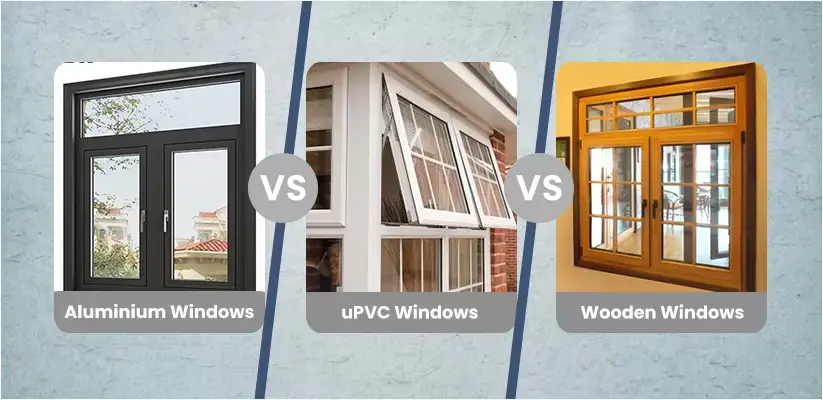
1. The Triad of Modern Fenestration Framing Materials
When designing building envelopes, architects, structural engineers, and property developers consistently evaluate three primary framing materials: Thermally Broken Aluminum, Vinyl / Unplasticized Polyvinyl Chloride (uPVC), and Solid Hardwood / Engineered Timber.
While each material has historical applications, the demands of contemporary architecture—featuring floor-to-ceiling glass openings, ultra-narrow sightlines, 50-year maintenance-free durability, strict fire codes, and multi-century environmental recyclability—have fundamentally altered the selection matrix.
2. Comprehensive Multi-Dimensional Architectural Performance Matrix
| Engineering Performance Metric | Thermally Broken Aluminium (6063-T6 + PA66 Break) | Vinyl / uPVC (Multi-Chamber with Steel Reinforcement) | Solid Timber / Engineered Hardwood (Oak / Teak / Larch) |
|---|---|---|---|
| Structural Strength & Sash Capacity | Supreme (Modulus of Elasticity ~70 GPa). Supports single glass sashes exceeding 350–500 kg and heights up to 3.5–4.0m. | Low (Modulus ~3 GPa). Requires heavy steel core inserts; sashes sag if width > 1.0m or weight > 100 kg. | Moderate-to-High (Modulus ~10–12 GPa). Good structural capacity, but prone to grain deflection over long spans. |
| Sightlines & Visual Aesthetics | Ultra-narrow minimalist frames (45–65mm sightlines); maximizes daylight and glass surface area. | Bulky, thick profile sections (80–110mm) required to compensate for material softness. | Medium-to-wide sightlines (70–90mm); offers natural wood warmth and classic traditional aesthetics. |
| Thermal Insulation | 1.0 – 1.8 with multi-chamber PA66 strips and foam cores. (Passivhaus Compliant). | 1.1 – 1.5 (Good raw material insulation, but steel inserts degrade performance). | 1.2 – 1.6 (Natural thermal insulator). |
| Lifespan & Environmental Durability | 45 to 50+ Years. Zero warping, rotting, rusting, or termite degradation across all climates. | 20 to 25 Years. Prone to UV yellowing, surface chalking, and brittle embrittlement in hot/high-UV zones. | 25 to 35 Years. Highly vulnerable to rot, fungal decay, moisture swelling, and termite attack without constant care. |
| Maintenance Requirements | Virtually Zero. Routine cleaning with mild soap and water; factory powder coating lasts decades. | Low maintenance, but scratches and UV fading cannot be repaired or repainted. | Extremely High. Requires sanding, re-staining, or sealing every 2 to 4 years to prevent water damage. |
| Fire Safety & Toxicity | Non-Combustible (Melting point > 650°C). Produces zero toxic smoke or flaming droplets. | Thermoplastic. Deforms at 80°C; releases toxic, corrosive Hydrogen Chloride ($HCl$) gas in building fires. | Combustible. Requires fire-retardant chemical treatment to meet commercial fire codes. |
| Environmental Sustainability & Circularity | 100% Infinitely Recyclable without loss of metallurgical properties. 95% energy saved during recycling. | Difficult to recycle due to mixed steel/lead/plastic stabilizers; mostly ends in landfills or incineration. | Renewable if sourced from certified sustainable forestry (FSC certified), but chemical sealants limit disposal. |
3. Architectural Decision Guide: Which Material Fits Your Project?
- Specify Thermally Broken Aluminum When:
The project features modern architecture, large floor-to-ceiling glass spans (bifold, lift-and-slide, or pivot doors), high wind load requirements (coastal/high-rise), hot/tropical/desert climates with high UV, or commercial developments seeking a 50+ year maintenance-free lifecycle. - Specify uPVC When:
The project is a budget-constrained residential development in a mild temperate climate where window openings are small-to-standard size, aesthetic sightlines are not a priority, and initial CapEx is the sole deciding metric. - Specify Solid Wood / Wood-Clad When:
The project involves historical preservation, classic heritage villas, or interior rustic luxury designs where authentic interior timber grain is mandatory and a dedicated maintenance budget is available.
Frequently Asked Questions (FAQ) – Fenestration Materials Comparison
Q1: Is uPVC significantly cheaper than thermally broken aluminum?
A1: Standard uPVC windows generally cost 20% to 35% less than thermal break aluminum for small, standard-sized windows. However, for large floor-to-ceiling openings, heavy triple glazing, or custom RAL colors, heavy steel-reinforced uPVC approaches the cost of aluminum while offering inferior strength and shorter lifespan.
Q2: Why is uPVC not recommended for hot, sunny climates (Africa, Middle East, Australia, Florida)?
A2: High ambient heat and intense UV radiation cause vinyl (uPVC) polymers to expand excessively, soften, and degrade. Over 5 to 8 years, dark uPVC frames bow and warp, causing window sashes to jam and gaskets to leak air and water.
Q3: Can aluminum match the warm interior look of wood windows?
A3: Yes. Two popular solutions exist: 1) Advanced 3D vacuum heat-transfer woodgrain powder coating that replicates natural oak, teak, or walnut grain on aluminum; and 2) Wood-Aluminium Composite Systems (Alu-Clad), featuring solid interior hardwood coupled with an exterior structural thermal break aluminum shield.
Q4: Why are modern commercial glass facades exclusively built with aluminum?
A4: Aluminum is the only architectural material combining high modulus of elasticity, precise extrusion tolerance (<0.1mm), lightweight handling, total non-combustibility, and 50+ year structural resistance to seismic and dynamic wind pressures.